Punjab Board 9th Class Grace Marks Rules 2026
Punjab boards award up to 5 grace marks for SSC Part-I 2026, and the pass mark in every subject is now 40% — not 33%. Here is exactly how both rules work. IBCC reform, notified as IBCC/182/Imp-03(ii)/7-1/2025 on 29 September 2025. Ninth class is in the first group it applies to.
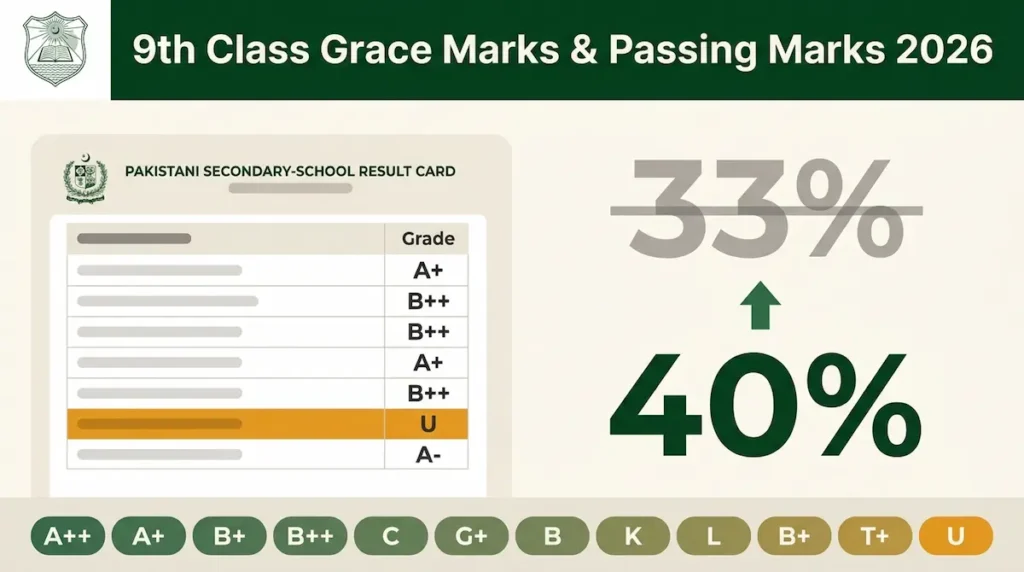
Why 33% is no longer your rule
The threshold arrives in phases. Grade 9 and Grade 11 moved first, from the 1st Annual Examination 2026. Grade 10 and Grade 12 follow in 2027, with all boards aligned by 2028.
So in the same household this year:
- A 9th class candidate is assessed at 40% per subject.
- A 10th class candidate sitting the 2026 annual exam is still assessed at 33%.
Pages quoting a flat “33% for all Punjab boards” are describing your senior sibling’s rule, not yours.
What 40% means in real marks
|
Paper total |
Old pass (33%) |
2026 pass (40%) |
|---|---|---|
|
|
|
|
50 marks — Islamiat, Pakistan Studies |
17 |
20 |
|
505 aggregate |
167 |
202 |
The threshold is applied subject by subject. A strong aggregate does not rescue one weak paper.
The grace marks rule, precisely
Grace marks rose from 3 to 5 alongside the new threshold. Three conditions govern them:
- Ceiling of 5 marks. A candidate sitting at 35% can be lifted to 40%. One at 33% cannot.
- Maximum of two subjects. The relaxation is capped at two papers.
- Nothing above two failures. Fail a third subject and the facility is withdrawn completely — including from the first two.
Two things students get wrong every year.
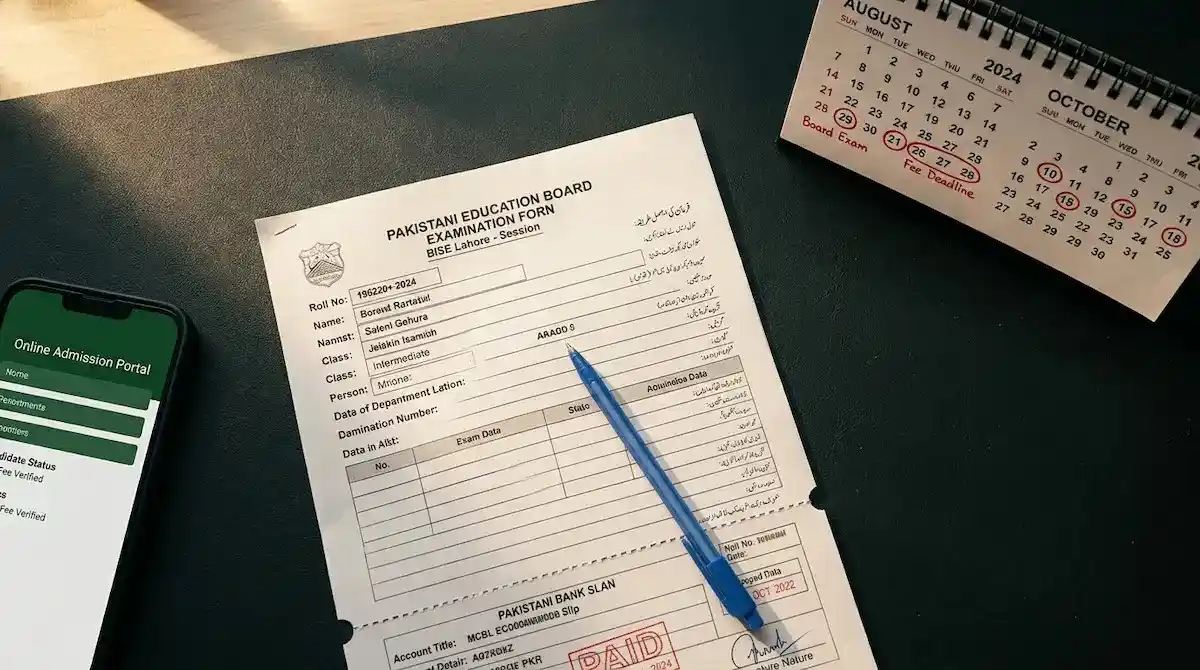
Grace marks are not applied for. No form, no fee, no bank challan. Boards apply them during result compilation, before the gazette is uploaded, so your marksheet already reflects them.
And they are not a favour granted because a paper was difficult. That is Indian CBSE practice appearing in search results — it is not Punjab BISE policy.
Boards have not published whether the 5-mark ceiling is per subject or shared across both papers. Treat 5 as the outer limit and plan to reach 40 on merit.
Your result card looks different this year
The 7-point scale (A-1 to F) is gone. SSC Part-I 2026 uses ten grades:
| Percentage | Grade | Descriptor |
|---|---|---|
| 96–100 | A++ | Extraordinary |
| 91–95 | A+ | Exceptional |
| 86–90 | A | Outstanding |
| 81–85 | B++ | Excellent |
| 76–80 | B+ | Very Good |
| 71–75 | B | Good |
| 61–70 | C+ | Fairly Good |
| 51–60 | C | Above Average |
| 40–50 | D | Emerging |
| Below 40 | U | Ungraded |
There is no E grade. Several sites still publish a 2024 draft table containing one — that version was superseded. “Fail” is now reported as U (Ungraded).
Absolute marks still print alongside the grade this year. GPA and CGPA were deferred after universities raised objections, so no GPA appears on your 2026 card. Verify your grade against the official board gazette once it is uploaded.
If you still fall short
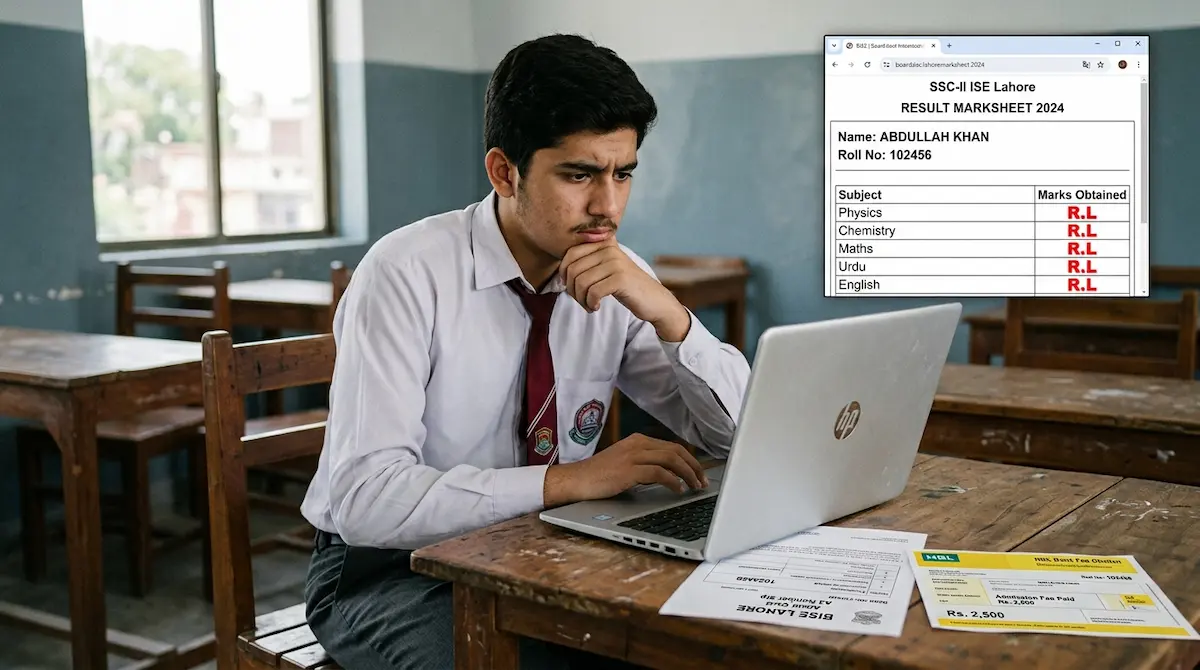
A U grade in one or two subjects sends you to the 2nd annual examination — not back into ninth class. Cohort rules apply: anyone re-appearing in a subject originally sat under the old system is assessed under the old system.
Read the grade column, not just the marks, when you check your 9th class result 2026 on 2 September.